The Jazz of Physics
How ideas from jazz, from harmony to improvisation, can help us think about the structure of the universe.
View The Jazz of PhysicsStephon Alexander
Contact MePhysicist · Author · Jazz saxophonist
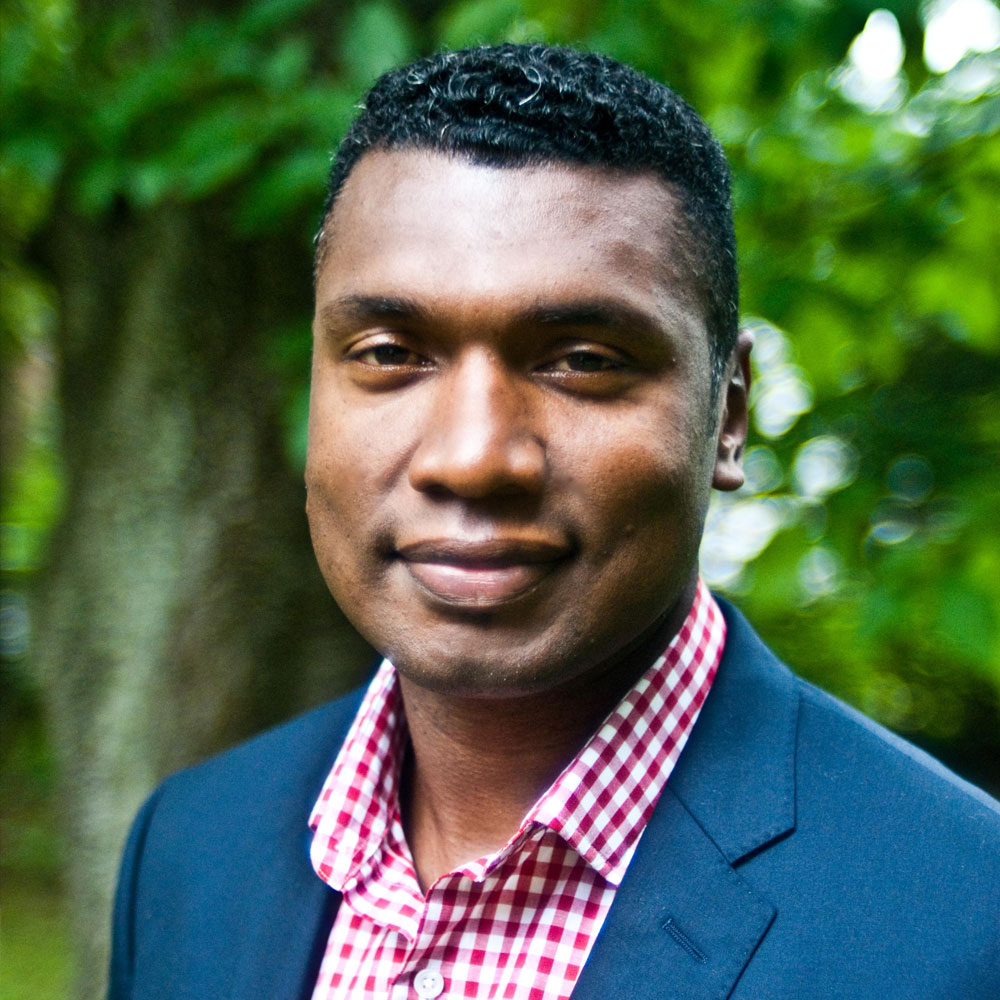
From his childhood in Trinidad and the Bronx to his leadership roles in science, Stephon Alexander has brought curiosity and creativity to research and teaching. A theoretical and computational physicist at Brown University, he studies the early universe and explores how jazz improvisation can inspire new ways of thinking about physics.
Biography
Stephon Haigh-Solomon Alexander was born on March 30, 1971, in Trinidad and Tobago, and grew up in the coastal village of Basse-Terre, Moruga. Immersed in Caribbean culture, he often listened to local stories about the sea and the stars, which sparked an early fascination with the universe. His father, Keith, worked as a computer technician, and his mother, Felician, was a nurse. Their influence encouraged both curiosity and compassion, shaping his early outlook on learning and discovery.
When he was eight years old, Alexander and his family moved to the Bronx, New York City. The shift from Trinidad’s quiet coastal life to an urban environment brought both challenges and opportunities that broadened his perspective. While attending DeWitt Clinton High School, physics teacher Daniel Kaplan recognized his curiosity and helped him engage more deeply with scientific ideas. Kaplan’s mentorship played a significant role in nurturing Alexander’spassion for theoretical physics and set the foundation for his future academic path.
Research
Stephon Alexander’s research in theoretical physics has made a lasting impact on cosmology and gravitational theory. In 2001, while a graduate student at Brown University, he co-developed the D-Brane inflation model, proposing that cosmic inflation could result from the interaction and annihilation of higher-dimensional membranes. This idea helped shape later developments in string cosmology.
His work on Chern-Simons modified general relativity introduced parity-violating terms into Einstein’s equations, offering new ways to study gravitational wave polarizations. In 2018, he predicted the existence of chiral gravitational wave signatures, providing testable predictions for future gravitational-wave observatories. His 2022 research on neutrino self-interactions within modified gravity frameworks offered theoretical explanations for certain anomalies observed in early-universe particle behavior.
Over the course of his career, Alexander has published more than 150 peer-reviewed papers and participated in major collaborations across theoretical and experimental physics. His work bridges quantum mechanics and cosmology, influencing research at CERN, LIGO, and several leading astrophysics institutions.
How ideas from jazz, from harmony to improvisation, can help us think about the structure of the universe.
View The Jazz of PhysicsAn account of the questions shaping modern physics and the perspectives that could change how we pursue them.
View Fear of a Black UniverseIn this TEDxSanDiego talk, Alexander uses jazz to explain how he thinks about the universe.
Watch the TEDx talkListen to a track featured in the audio collection on Alexander’s original site.
Listen on SpotifyCommunication and Outreach
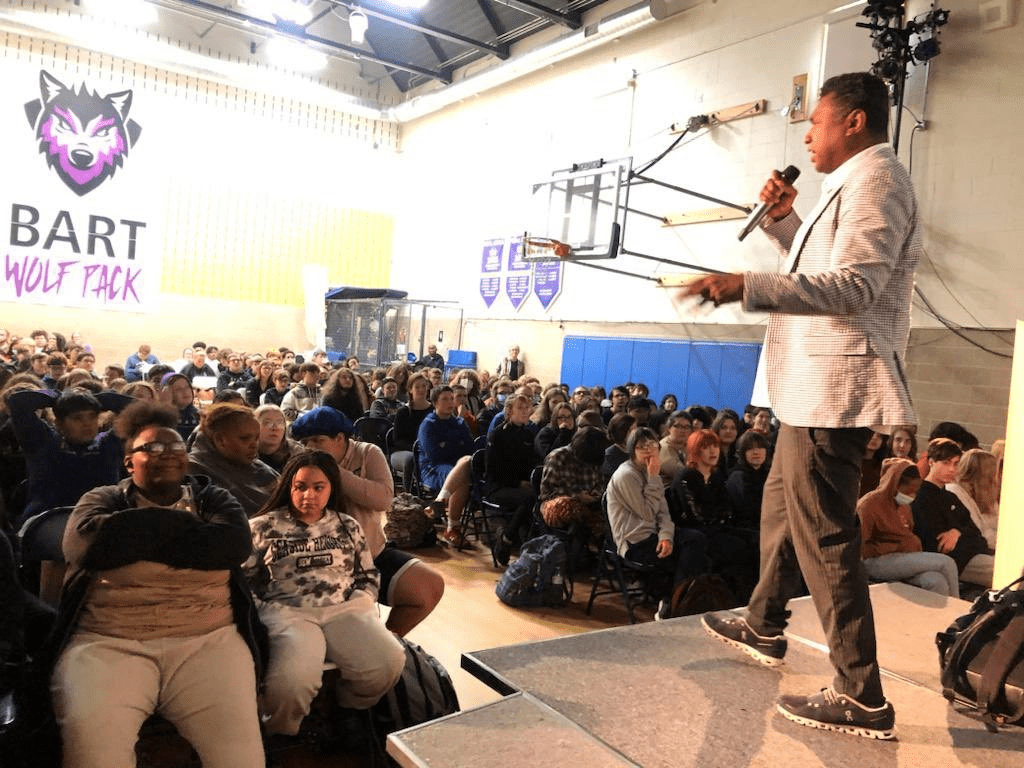
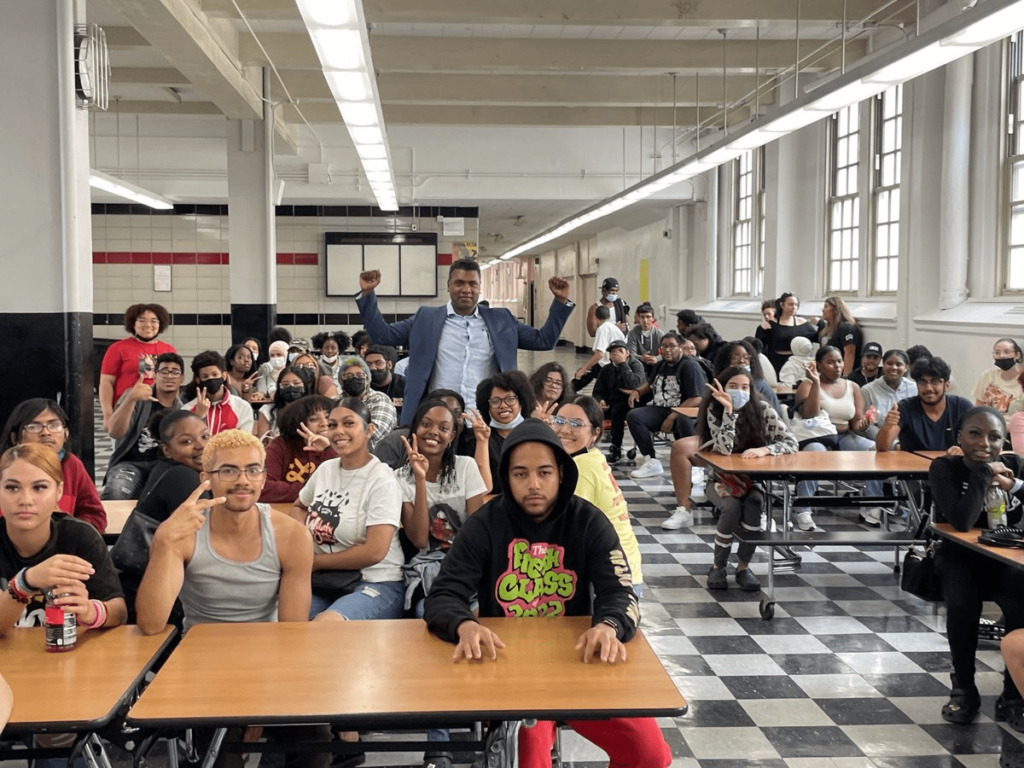
Alexander is actively involved in science communication and education outreach. Named a National Geographic Explorer in 2017, he conducted research on the relationship between music and science in Caribbean and Amazonian cultures. His TEDx talk, “The Jazz of Physics,” has received over one million views, and he has appeared on programs such as PBS NOVA and NPR’s Code Switch, where he presents complex scientific concepts in accessible language.
He serves on the board of Math for America, advising on curriculum development and teacher training. Alexander also consults for educational policymakers in New York State, promoting arts-integrated STEM learning and community science initiatives that have reached thousands of students.

Achievements
Alexander’s achievements have been recognized both in his home country and internationally. He has been honored by Trinidad’s National Institute of Higher Education, Research, Science and Technology (NIHERST) as a national science icon and featured in the Caribbean Science Festival.
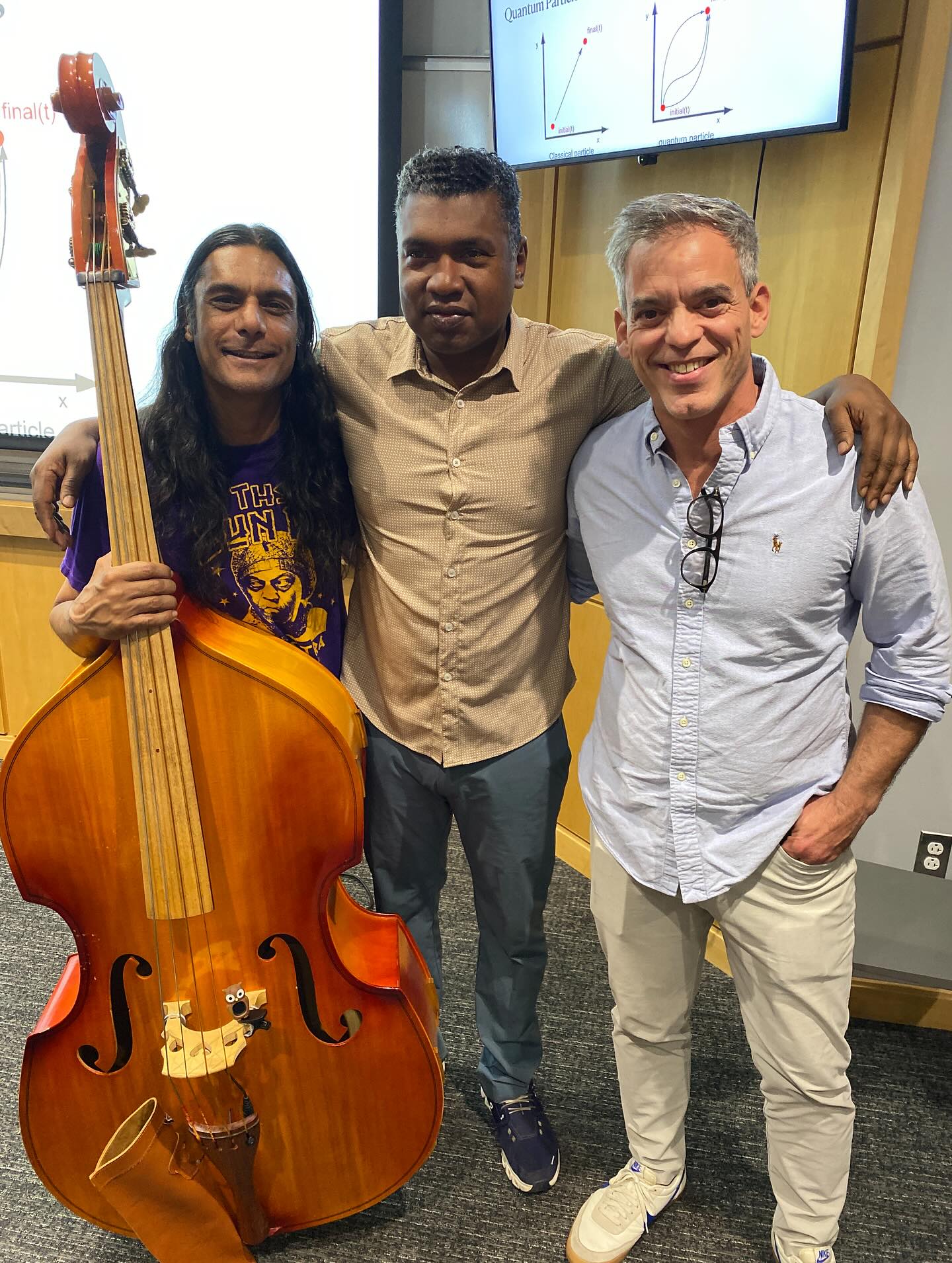
Internationally, he has delivered lectures at CERN, the International Centre for Theoretical Physics in Trieste, and the Kavli Institute in China. He has also collaborated with the European Space Agency and UNESCO on initiatives that link science, culture, and education.